
Overview
Energy security and energy diplomacy have emerged as critical global issues with far-reaching implications for nations, economies, and international relations. Energy, being the critical component of modern societies, plays a pivotal role in driving economic growth, ensuring national security, and addressing pressing environmental challenges. The secure and reliable supply of energy resources, coupled with effective diplomatic strategies, is essential to maintain stability, promote sustainable development, and address global energy challenges. The intersection of energy and statecraft has become a critical area of study and practice, with profound implications for countries’ economic stability, geopolitical influence, and environmental sustainability.
Energy, as a strategic resource, influences the behavior of nations, shapes alliances, and impacts global power dynamics. It has the potential to serve as both a catalyst for cooperation and a source of conflict among nations. Understanding the intricate relationship between energy security and energy diplomacy is crucial for effectively managing energy resources, mitigating risks, and promoting stability in an increasingly interconnected world.
Key stakeholders, including governments, policymakers, energy companies, and international organizations, recognize the need to integrate energy considerations into their diplomatic strategies. Energy security encompasses the availability, accessibility, affordability, and reliability of energy sources, while energy diplomacy focuses on the negotiation and collaboration among nations to achieve mutual energy interests and address shared challenges.
The importance of energy security and energy diplomacy in statecraft cannot be overstated. Nations that possess a robust energy security strategy are better equipped to navigate geopolitical challenges, respond to disruptions in energy supply, and safeguard their economic prosperity. Energy diplomacy, on the other hand, enables countries to build alliances, negotiate energy agreements, and influence global energy governance frameworks.
Mission
The mission of the Center for Energy Security and Diplomacy Studies is to leverage The Institute of World Politics’ (IWP) established strengths and regional expertise to meet the pressing academic demand for critical analysis and objective risk assessment in the strategically significant and often misunderstood field of energy security and energy diplomacy. By capitalizing on IWP’s distinctive grasp of global realities and dedication to scholarship informed by real-world experience, the Center aims to enrich the current academic curriculum. Its primary focus will be to identify and interpret observable risks and threats, providing both theoretical comprehension and practical scenarios and solutions.
By establishing a Center for Energy Security and Diplomacy Studies at the IWP, we aim to deepen our understanding of the complex interplay between energy and statecraft. This Center will serve as a platform for research, education, policy engagement, and international collaboration, with a focus on advancing knowledge and expertise in the field of energy security and energy diplomacy.
Through this initiative, we will empower students, researchers, and policymakers to analyze energy challenges, develop effective strategies, and contribute to global energy governance. By integrating the principles of energy security and energy diplomacy into the realm of statecraft, we can foster stability, cooperation, and sustainable development in the energy sector.
The Center for Energy Security and Diplomacy Studies will serve as a beacon of knowledge, offering insights, expertise, and innovative solutions to address the energy and statecraft challenges of the 21st century. With a focus on interdisciplinary collaboration, policy relevance, and international cooperation, the Center will play a pivotal role in shaping the next generation of energy leaders and fostering a more secure and sustainable energy future.
Key Objectives:
Research: The Center will undertake cutting-edge research on energy security and diplomacy, focusing on areas such as energy geopolitics, energy transition, renewable energy security, energy infrastructure resilience, and energy governance. The research findings will contribute to the academic knowledge base and inform policy decisions.
Education and Training: The Center will offer specialized courses, workshops, executive and academic training programs on energy security and energy diplomacy, aimed at enriching students’ knowledge and expertise in energy and statecraft. These educational initiatives will equip students with the skills and insights necessary to navigate the complex intersection of energy and international relations.
Energy Events: The Center aims to foster collaborative efforts by hosting a series of impactful events. Among its key objectives is to bring together distinguished scholars, practitioners, policy makers, academics, and experts in the realms of energy security and diplomacy. These gatherings will serve as vital platforms for in-depth discussions, allowing participants to exchange insights, share best practices, and explore innovative solutions to the challenges facing the global energy landscape. By facilitating these engaging events, the Center will contribute to the advancement of knowledge, the promotion of effective policies, and the cultivation of a dynamic network of professionals dedicated to shaping a sustainable and secure energy future.
Policy Engagement: The Center will actively engage with policymakers, industry stakeholders, and international organizations through policy dialogues, conferences, and expert consultations. By providing a platform for informed discussions, the Center will facilitate the formulation of effective energy security policies at regional, national, and global levels.
International Collaboration: The Center will establish partnerships with leading academic institutions, research centers, and think tanks worldwide, fostering international collaboration on energy security and energy diplomacy. These collaborations will enable knowledge exchange, joint research projects, and shared resources, enhancing the Center’s global impact and promoting cross-cultural understanding.
Outreach and Awareness: The Center will organize public lectures, seminars, and awareness campaigns to disseminate knowledge and raise public awareness about energy security and its implications for diplomacy. By engaging with the wider community, the Center will foster informed discussions and promote sustainable energy practices.
Leadership
The head of the Center for Energy Security and Diplomacy is Dr. Sara Vakshouri.
Past Lectures
Below are lectures organized by Dr. Sara Vakhshouri:
Global Energy Security: The Role of Canada
with Mr. James Rajotte, Mr. Craig Weichel, and Dr. Sara Vakhshouri
April 17, 2023
Video
The Russia-Ukraine War and Global Energy Security
with Mr. Kelly Ogle and Dr. Sara Vakhshouri
June 21, 2022
Video
COVID-19 and Global Energy Security
with Dr. Sara Vakhshouri and Mr. C. Derek Campbell
June 22, 2020
Video
Measuring Energy Security Risk: Assessing Risk in a Global Energy Market
with Stephen D. Eule
November 4, 2019
Video
Israel’s Energy Security and Strategy: Changing Dynamics in the Age of Gas
with Dr. Sujata Ashwarya
September 18, 2019
Video
New Dynamics of Energy Security; U.S. Sanctions on Iran & Venezuela, Shale Boom & OPEC
with Dr. Sara Vakhshouri
April 22, 2019
Video
Energy Security: New Market Realities
with Dr. Sara Vakhshouri
September 25, 2017
Video
News
Dr. Sara Vakhshouri speaks at Harvard’s Middle East Initiative Study Group
In April 2025, Dr. Sara Vakhshouri participated in a panel discussion at the third session of Harvard’s Middle East Initiative Study Group, “Shifting Geoeconomics and National Development in the GCC States.”
The other panelists were Dr. Youssef Chahed, MEI Senior Fellow, Adel Hamaizia, MEI Research Fellow, and Eng. Suliman Almazroua, CEO of National Industrial Development and Logistics Program (NIDLP). 40 Harvard students and affiliates were in attendance.
 Photo courtesy of Harvard’s Middle East Initiative
Women & Energy Diplomacy Leadership Program (WEDL)
Overview
The Women and Energy Diplomacy Leadership Program (WEDL) is a two-week program designed for high-level executive female leaders by the IWP Center for Energy Security and Diplomacy and implemented for female executive leaders in Saudi Arabia, in collaboration with the Women and Energy Initiative (WE). The first week of the program was implemented in Riyadh from 16-20 February 2025, and the second week will take place in Washington, D.C.
 Saudi Energy Minister, HRH Prince Abdulaziz Bin Salman Al Saud
The first three days of the program focused on intensive coursework at the KAPSARC School of Public Policy (KSPP), designed to establish a solid foundation in energy diplomacy. Participants engaged in interactive lectures, case studies, and discussions covering key topics such as energy markets, geopolitical influences, and policy frameworks. Guest speakers on the second and third days brought valuable insights, enriching the learning experience. Participants actively engaged in these sessions, raising critical questions and discussing real-time policy challenges.
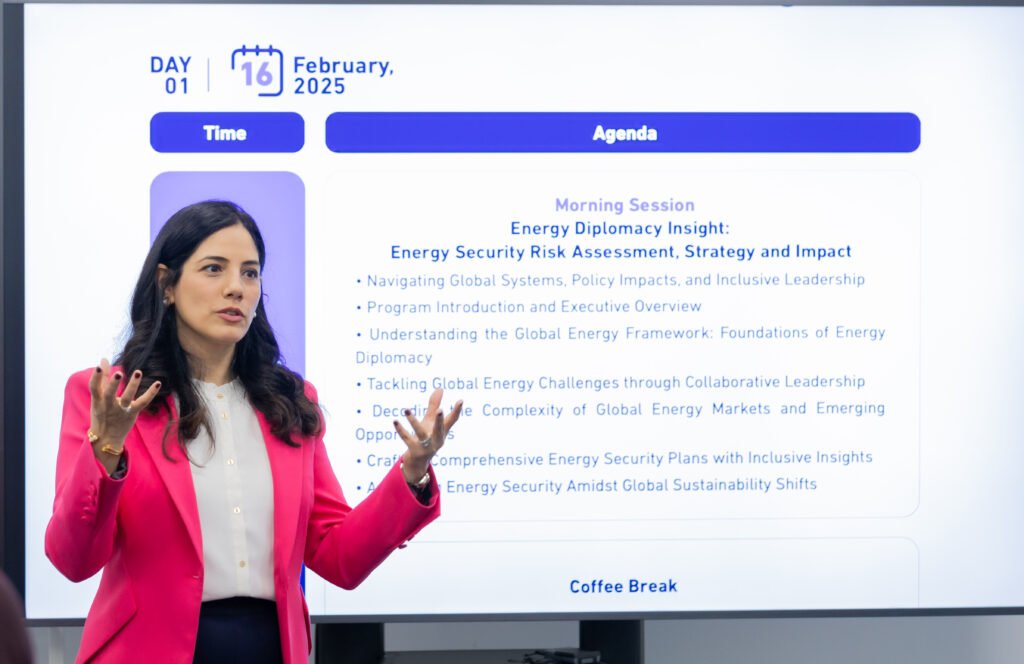 Dr. Sara Vakhshouri speaking at WEDL
 WEDL 2025
Guest Speaker Highlights; Wisdom from Industry Leaders
Guest speaker sessions were held on the second and third days, featuring distinguished experts who provided valuable insights.
On the second day, Dr. Anwar Matawa delivered a session on Executive Mastery: Cross-Cultural Communication in Global Leadership. This session emphasized the role of effective communication in international diplomacy and business, equipping participants with the skills to navigate diverse global energy markets and negotiations.
 Dr. Anwar Matawa
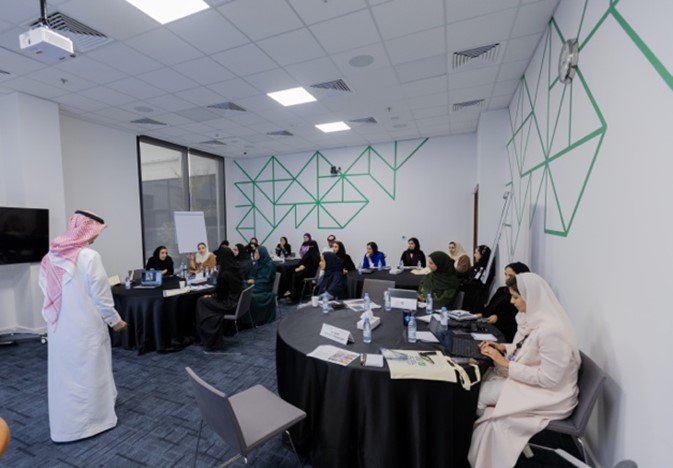
On the third day, H.H. Princess Mashael Alshalan led an Executive Roundtable titled “From Vision to Impact: Personal Reflections on Leadership, Challenges, and Transformation.” This session provided an inspiring perspective on leadership in the energy sector, personal challenges, and driving meaningful transformation. Participants engaged deeply, asking insightful questions and reflecting on their own leadership journeys.
 H.H. Princess Mashael Alshalan discussing “From Vision to Impact: Personal Reflections on Leadership, Challenges, and Transformation.”
 Dr. Sara Vakhshouri and H.H. Princess Mashael Alshalan
These sessions were well-received, with high participation and engagement from the attendees. The interactive nature of these discussions further enriched the learning experience, allowing participants to gain practical knowledge and perspectives from industry leaders.
Real-World Energy Engagement at IEF; Bridging Theory with Global Policy
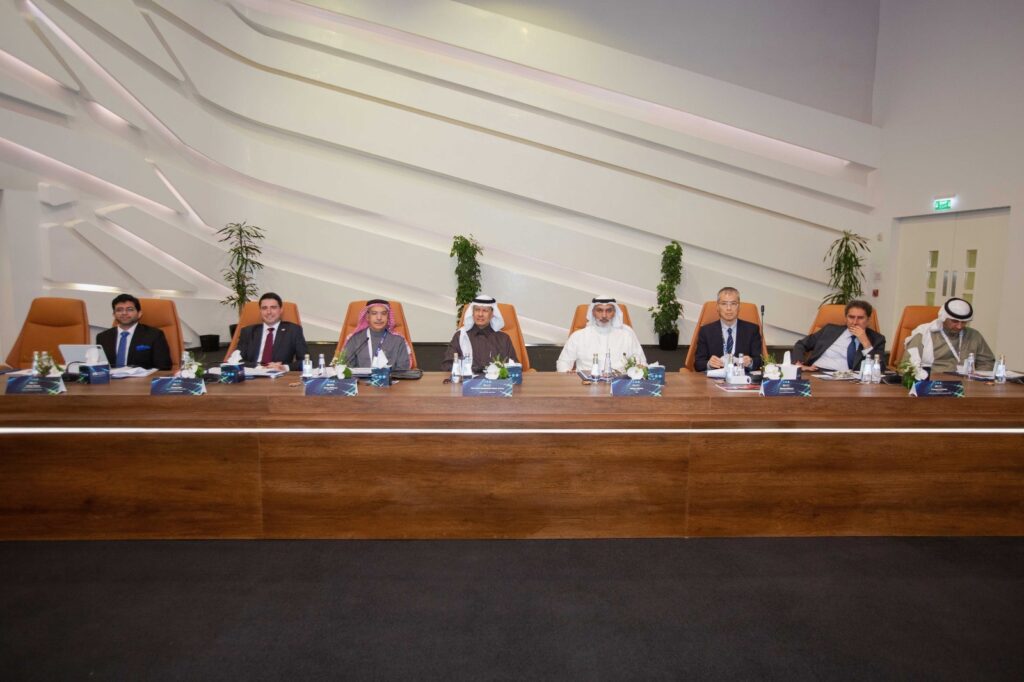
On the fourth day, participants attended the 15th IEF-OPEC-IEA Symposium, which provided them with a unique opportunity to engage with global energy leaders, policymakers, and industry experts. This session allowed them to apply their newly acquired knowledge and actively participate in discussions on energy markets, policy frameworks, and global energy security.
Additionally, participants joined the IEF Thought Leaders Workshop on Fuel Sustainability, where they explored key sustainability challenges and innovations in the energy transition. This workshop reinforced the importance of energy diplomacy and broadened their understanding of emerging trends in the industry.
 IEF-OPEC-IEA Symposium
 IEF-OPEC-IEA Symposium
On the final day, some participants attended an optional IEF workshop on Fuel Sustainability at the IEF headquarter in the morning. In the afternoon, all participants attended the wrap-up session at the Ministry of Energy. This session included a meeting with environmental negotiators at the Ministry of Energy (MOE) and visits to multiple sections of the ministry, providing participants with valuable exposure to energy policy and governance. These real-world experiences were particularly important in bridging the course content with practical applications. Participants found these engagements highly beneficial, as they allowed them to witness firsthand how energy diplomacy operates in practice.
The Center for Energy Security and Diplomacy hosts Mr. Tatsuya Terazawa
IWP’s Center for Energy Security and Diplomacy recently hosted Mr. Tatsuya Terazawa, Chairman and CEO of the Institute of Energy Economics, Japan. Dr. Sara Vakhshouri, Chair of the Center, led discussions on U.S.-Japan energy relations and diplomacy.
Mr. Terazawa, formerly Vice-Minister for International Affairs at Japan’s Ministry of Economy, Trade and Industry, also served as a special assistant to Prime Minister Shinzo Abe.
 Dr. Sara Vakhshouri and Mr. Tatsuya Terazawa
Energy Security class visits the Army Navy Club
Dr. Sara Vakhshouri and her Energy Security class met at the Army Navy Club for a visit to the library and a class discussion in April 2024. Read more

The Center for Energy Security and Diplomacy at IWP discusses energy access and economic empowerment in Madagascar
The Center for Energy Security and Diplomacy at The Institute of World Politics recently convened a meeting to discuss energy access and economic empowerment in Madagascar. The session welcomed a delegation from Madagascar, headed by Ms. Amielle Niriniavisoa Marceda, Chargé d’Affaires of the Embassy of Madagascar in Washington, D.C. Also participating were Ambassador Aldona Wos, President of IWP, Professor Sara Vakhshouri, Chair of the Center, and a group of students. Read more

IWP and KAPSARC hold executive training course on Energy Security and Energy Diplomacy
In a collaborative effort between IWP and the King Abdullah Petroleum Studies and Research Center (KAPSARC), an impactful five-day executive training course on Energy Security and Energy Diplomacy unfolded from December 24-28, 2023. Dr. Sara Vakhshouri, an IWP professor and Chair of Center for Energy Security and Energy Diplomacy, and expert in the field, designed and led the course, inviting six distinguished guest speakers to contribute valuable insights.
Active participants included IWP interns Thea Porter and Victor Kiss, who were able to engage with industry leaders to enhance their understanding of energy dynamics. The program attracted 38 mid-level executives from the energy and nuclear industry, forming a dynamic group eager to explore the intricacies of energy security and diplomacy. Read more
 Dr. Sara Vakhshouri, head of the Center for Energy Security and Diplomacy, along with interns Thea Porter and Victor Kiss, with participants in an Energy Security and Energy Diplomacy Executive Course, offered in conjunction with KAPSARC, December 2023. Read more
Intern Highlights
Thea Porter interned with Dr. Sara Vakhshouri from May to December 2023. During her internship, she discovered a passion for energy security, researched these issues at IWP, and planned and participated in an executive course in Saudi Arabia. Read more about her experience
 Dr. Sara Vakhshouri with IWP interns Thea Porter and Viktor Kiss, enjoying a visit to the desert outside of Riyadh, Saudi Arabia.
Viktor Kiss interned during fall 2023. He conducted research with Dr. Sara Vakhshouri and traveled to Saudi Arabia for an executive training course on Energy Security and Energy Diplomacy organized by IWP and KAPSARC. Read more about his experience
 Viktor and Dr. Sara Vakhshouri in front of the Masmak Fort in Saudi Arabia
David Charles Clarke, an IWP intern during the summer 2022 semester, submitted his research work for the prestigious Gulf Research Meeting, an annual peer-reviewed conference held at the University of Cambridge, under the guidance of Dr. Sara Vakhshouri. His research paper was accepted and presented in July 2023. Read more about his experience
 David Charles Clarke and Dr. Sara Vakhshouri at Cambridge University